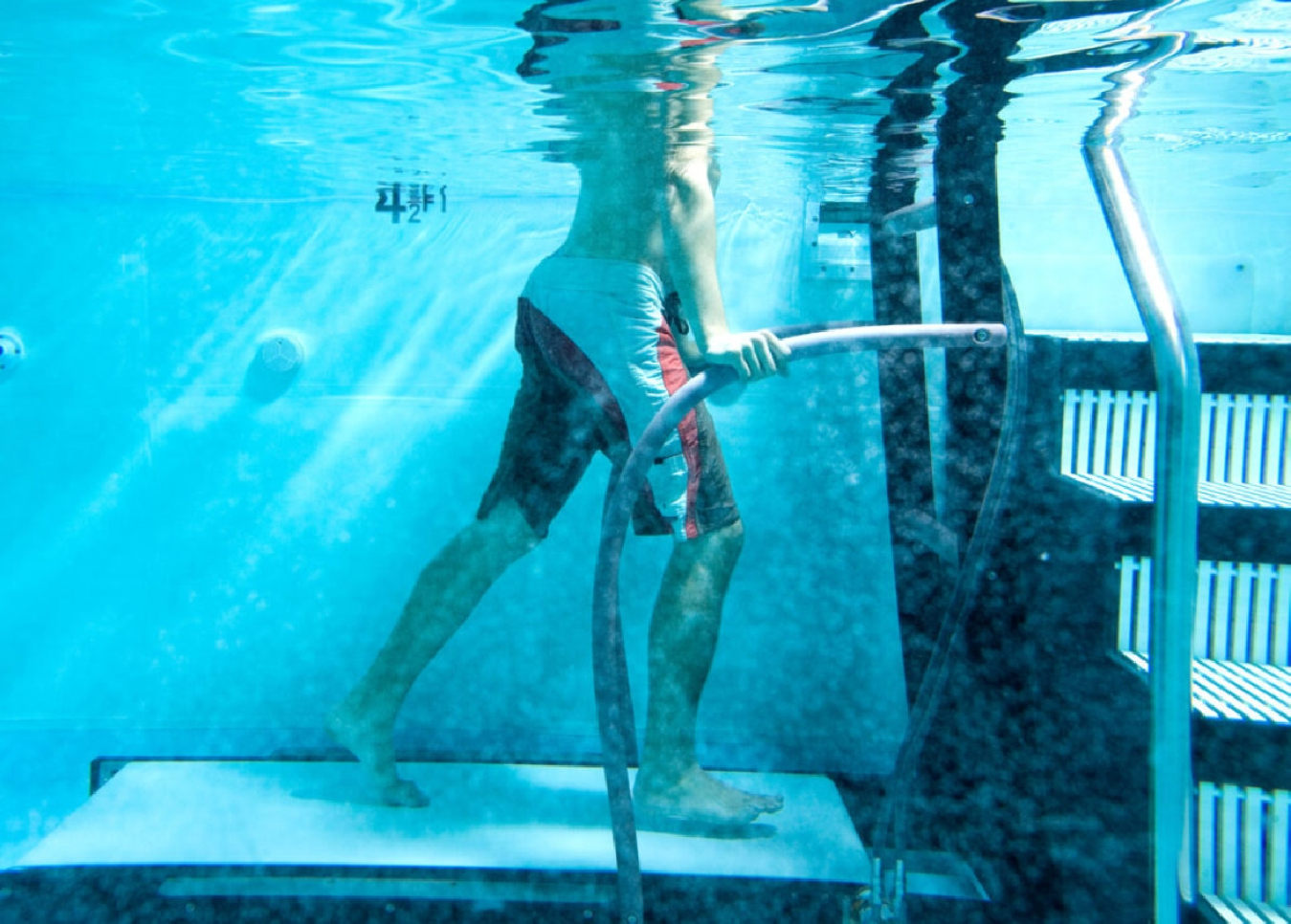

The Aquatic Musculoskeletal Rehabilitation Course is an advanced, evidence-informed programme designed to equip rehabilitation professionals with the clinical reasoning, assessment skills, and exercise-prescription strategies required to deliver effective aquatic therapy for musculoskeletal conditions.
Aquatic therapy provides a unique therapeutic environment that allows controlled unloading, graded resistance, neuromuscular re-education, and early functional movement—particularly valuable when land-based rehabilitation is limited by pain, weight-bearing restrictions, or reduced movement confidence.
This course emphasises clinical decision-making, progression strategies, and integration of aquatic therapy within comprehensive musculoskeletal rehabilitation pathways.
Aquatic therapy is not a substitute for land-based rehabilitation; it is a strategic clinical tool that enables earlier intervention, safer movement exposure, and optimal load management.
Key clinical benefits include:
Controlled reduction of joint compressive forces via buoyancy
Early restoration of movement patterns with minimal mechanical stress
Improved pain modulation through hydrostatic pressure and thermal effects
Safe challenge of balance, proprioception, and postural control
Progressive resistance using velocity, surface area, and turbulence
Enhanced neuromuscular coordination in functional movement tasks
On completion of the course, participants will be able to:
Apply the biomechanical and physiological principles of aquatic therapy to musculoskeletal rehabilitation
Select appropriate aquatic interventions based on pathology, healing stage, and functional goals
Design structured, individualised aquatic rehabilitation programmes
Progress patients safely from early rehabilitation to higher-load functional tasks
Integrate aquatic therapy with land-based rehabilitation for optimal outcomes
Apply evidence-based clinical reasoning to exercise selection and progression
Buoyancy, hydrostatic pressure, viscosity, and turbulence: clinical implications
Depth-dependent load modification and joint stress management
Thermal effects on pain, muscle tone, and circulation
Cardiopulmonary considerations in aquatic environments
Post-operative orthopaedic rehabilitation
Post-immobilisation and fracture rehabilitation
Acute and chronic musculoskeletal pain
Degenerative joint conditions
Sports and overuse injuries
Exercise selection based on impairment and functional limitation
Load manipulation through depth, speed, and lever arms
Resistance progression using drag forces and turbulence
Functional movement patterns: gait, squatting, lunging, reaching
Balance, stability, and proprioceptive training in aquatic settings
Assessment and screening for aquatic therapy
Safety considerations, contraindications, and risk management
Session structure and goal-based programming
Criteria for transitioning from aquatic to land-based rehabilitation
Case-based clinical reasoning and practical demonstrations
Face-to-face practical course
Integrated theory, demonstrations, and supervised hands-on application
Strong emphasis on clinical reasoning and real-world implementation

Bsc, PES, CES
Aquatic Musculoskeletal Rehabilitation Course
Timings: 8:00 AM – 5:00 PM (Both Days)
Delivery Format:
• Theory: Online (audio-based presentations)
• Practical Training: Face-to-face, in-person sessions
Identifying patients who benefit most from aquatic rehabilitation
Clinical goals in post-surgical aquatic programmes
Progression strategies:
Range of motion
Flexibility
Strength development
Aquatic programme design:
Assessment and clinical decision-making
SMART goal setting
Frequency and progression principles
Transitioning to land-based rehabilitation:
Practising land-based tasks in the aquatic environment
Introducing land-based elements within sessions
Final rehabilitation phase: land loading, impact, and complexity
Noodle-based exercises
Aquatic dumbbell exercises
Running and locomotion drills
Aquatic belts and buoyancy aids
Kickboards and hand paddles
Aquatic mitts
Lower-limb progressions
Upper-limb progressions
Trunk and core stability progressions
Exercise selection for upper-limb rehabilitation
Progression and regression strategies
Weekly programming structure
Load parameters: volume, intensity, and dosage
Clinical reasoning using real rehabilitation scenarios
Programme modification and progression decisions
Exercise selection specific to muscle injuries
Progression and regression principles
Weekly programming and load management
Programme design and progression
Functional movement restoration
Return-to-activity considerations
Clinical progression strategies
Load tolerance and functional outcomes
Exercise selection for ligament healing phases
Progression and regression strategies
Weekly programming and load management
Stability, proprioception, and gait progression
Transition to land-based loading
Early-stage and mid-stage aquatic interventions
Functional progression strategies
Tendon-specific loading considerations
Progressive resistance strategies in aquatic settings
Load modulation and joint protection strategies
Functional progression planning
Clinical decision-making
Progression toward land-based rehabilitation
Clinically applied aquatic therapy for musculoskeletal rehabilitation
Post-surgical rehabilitation strategies using aquatic environments
Structured 8-week aquatic rehabilitation programme frameworks
Upper- and lower-limb aquatic exercise prescription
Muscle, ligament, tendon, cartilage, and meniscal injury rehabilitation
Gait retraining, balance, and functional movement in aquatic settings
Progression and regression strategies based on load tolerance
Transition planning from aquatic to land-based rehabilitation
Case-based clinical reasoning and real patient scenarios
Comprehensive aquatic exercise library with equipment integration
Face-to-face practical training with expert instruction
16 CME Hours approved by DOH / DHA / MOH
 Dubai
Dubai